
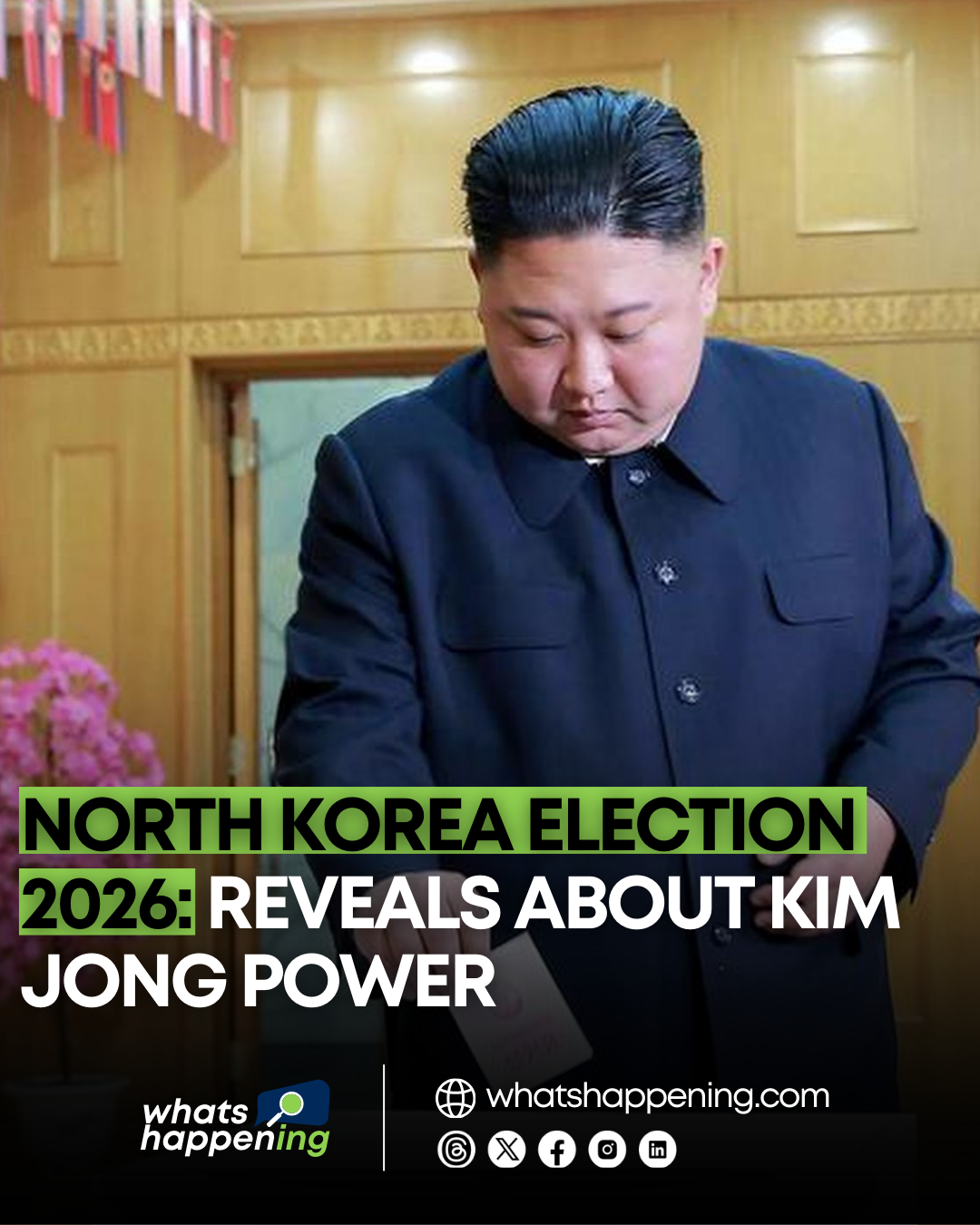
The recent election in North Korea has once again drawn global attention. While elections in the country differ significantly from democratic systems elsewhere, the results still offer important insight into the regime’s political structure, leadership strategy, and international positioning.
The latest vote reaffirmed the authority of Kim Jong Un, further consolidating his control over the state and its institutions.
Key Highlights of the Latest Election Results
- Consolidation of Leadership
The election results once again reinforced Kim Jong Un’s leadership. Analysts view the vote as a political ritual aimed at demonstrating unity and loyalty rather than testing popularity.
- Emphasis on Stability
State media framed the results as proof of national unity and stability. The leadership continues to emphasize:
Military strength
Economic self-reliance
Political loyalty
This messaging aligns with the country’s long-standing ideology of centralized authority.
- Global Reaction
International observers largely see North Korea’s elections as symbolic. Governments and analysts focus less on the vote itself and more on:
Policy announcements following elections
Military activity
Diplomatic signals
These factors often provide more insight into the regime’s direction than the results alone.
Why North Korea’s Elections Still Matter
Despite their predictable outcomes, elections in North Korea serve several strategic purposes:
Internal messaging: Demonstrating loyalty and unity
Elite management: Reinforcing party hierarchy
International signaling: Showing regime stability
For geopolitical analysts, these elections offer clues about shifts within the leadership structure and policy priorities.
Conclusion
The latest North Korea election results confirm what many expected: continued dominance by Kim Jong Un and the ruling political structure. While the vote does not reflect democratic competition, it remains an important tool for maintaining regime legitimacy and projecting stability both domestically and internationally.
Understanding these elections helps observers interpret North Korea’s political messaging and anticipate its future moves on the global stage.