
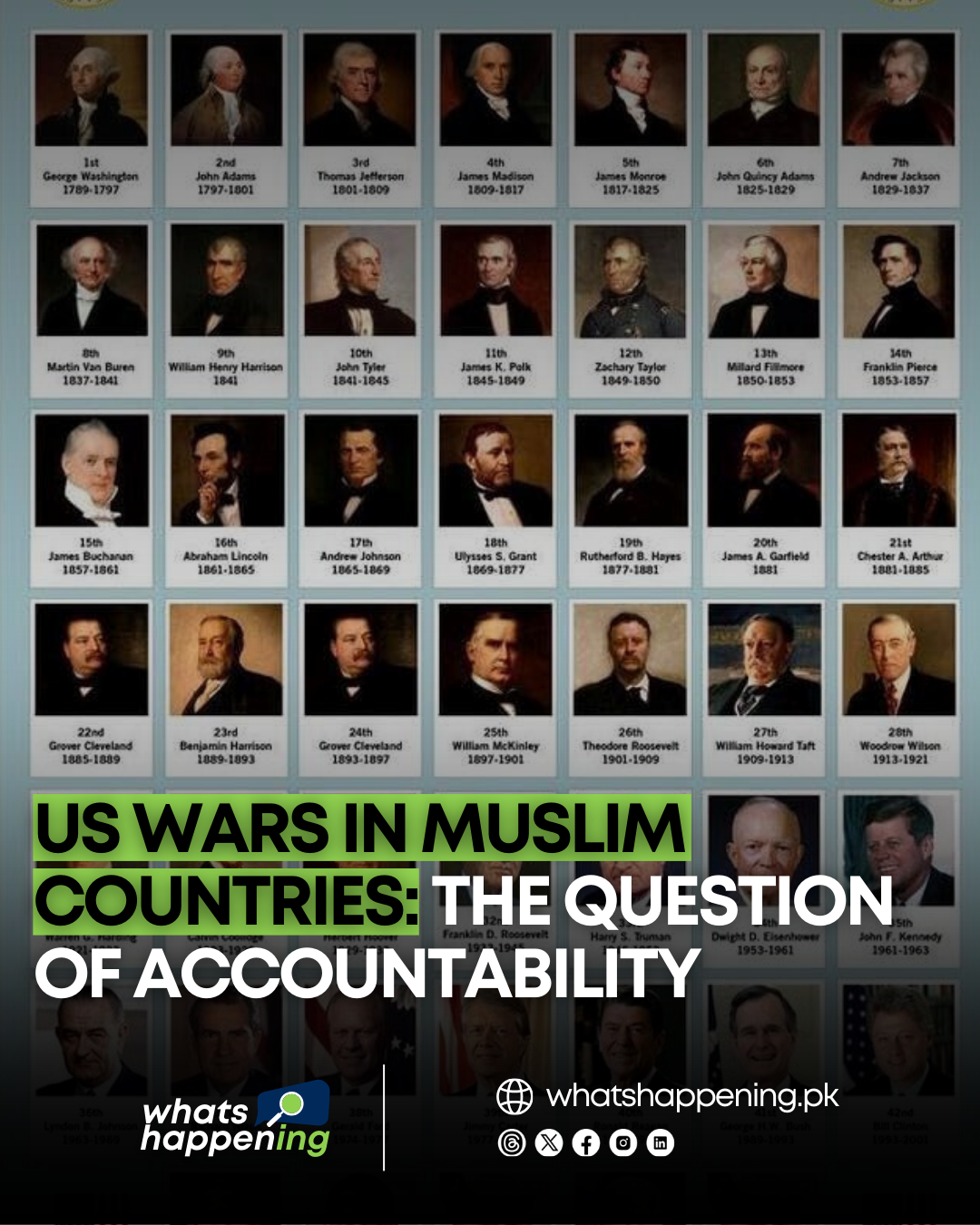
For decades, the role of the United States in Muslim-majority countries has been a topic of global debate. From the invasion of Iraq in 2003 to recent tensions and strikes involving Iran. Something deeper like power and influence.
This article takes an honest and balanced look at the issue. Focusing on facts, consequences, and the critical question: who is responsible for the destruction and loss of innocent lives?
The Iraq War: A Turning Point:
The Iraq War began under George W. Bush, with the primary justification that Iraq possessed weapons of mass destruction (WMDs). No active WMD stockpiles found after invasion.
This led to global criticism and raised serious concerns about:
- Faulty or misleading intelligence.
2. Political motivations behind the war.
3. Lack of proper international accountability
The war resulted in:
Massive destruction of infrastructure.
Hundreds of thousands of civilian deaths.
Long-term instability in Iraq.
Even leaders like Donald Trump admit publicly that the war was a mistake.
Iran Tensions: History Repeating Itself?
In recent years, tensions between the United States and Iran have escalated.
Supporters of U.S. policy argue:
Iran poses a regional security threat
Military action is necessary for deterrence
Critics argue:
The situation resembles the Iraq War narrative
The Human Cost of War
Families lose loved ones
Generations suffer long-term consequences
Who Is Responsible?
Responsibility for war is complex and shared:
- Political Leaders
Decisions made by leaders like George W. Bush and current policymakers directly shape military actions. - Global Power Structures
The United States, as a global superpower, operates within a system. Where powerful nations often act without facing equal consequences. - Intelligence and Military Systems
Flawed intelligence and strategic decisions contribute to outcomes that affect millions.
The Accountability Problem
One of the biggest concerns is the lack of accountability.
No major leader faced international prosecution
Global institutions like the International Criminal Court have limited power over major countries
Public criticism did not translate into legal consequences
This creates a perception that:
Powerful nations can act without facing real justice.
Conclusion:
The history of U.S. involvement in countries like Iraq and rising tensions with Iran. Highlight a difficult truth:
Can there ever be true accountability in global politics?
Until that question is answer, debates like these will continue across the world.